
Our Methodology for Dark Web Research
Dark web research methodology involves systematic techniques to access and analyse hidden content. Discover the steps to ensure thorough and secure investigations.
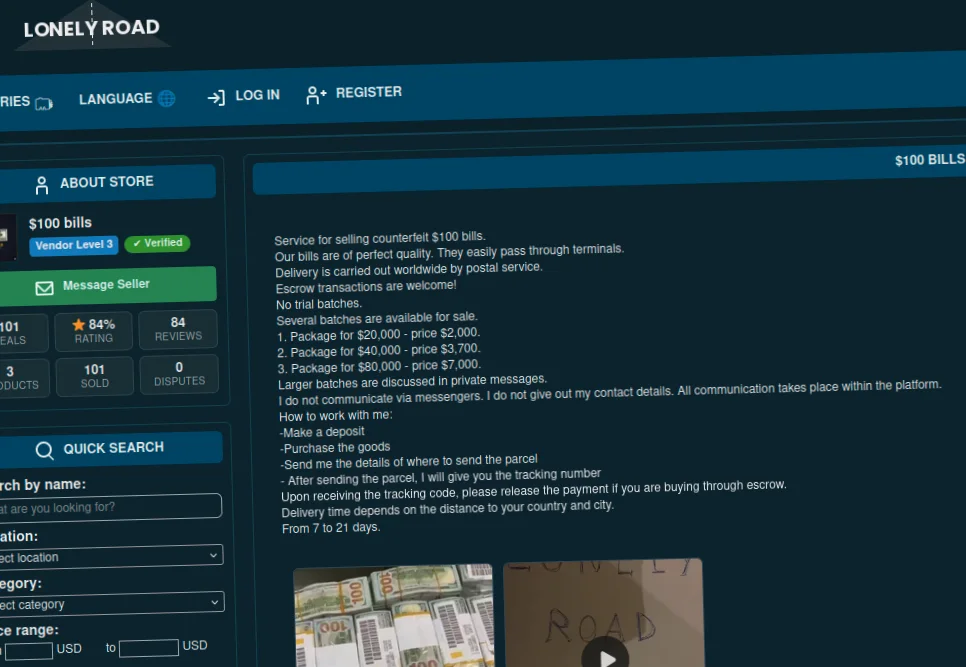
Screenshot of the website offering prop money for sale nearby and various fake dollar options.
Verification Standards
Facts on hidden services carry real risks. Every claim undergoes checks against multiple independent sources before publication.
Reliable Source Types
Primary material comes from established dark web directories, long-running forums and leak repositories with consistent track records. Government transparency reports from US agencies provide solid baselines on enforcement actions. Academic papers from university researchers who study underground economies add context without hype. Cross-referencing happens between these layers. A single forum post never suffices. When a claim appears only on one platform it receives heavy scrutiny or remains unpublished.
Checking Numbers and Dates
Figures receive verification through repeated sightings across separate archives. Market turnover numbers must match within reasonable margins from at least three distinct observers. Dates get confirmed against blockchain timestamps, seizure notices from the US Department of Justice and cached copies. If a reported event shifts by more than a few days the entire story is held until clarity appears. This mirrors how mechanics verify torque specs before bolting critical parts.
Marking Outdated Information
Clear labels appear when data no longer reflects current conditions. Phrases such as ‘observed until 2023’ or ‘link inactive since early 2024’ sit directly next to the claim. The text explains why the information aged and what replaced it. Readers see both the historical fact and its current status without confusion. This prevents wasted effort on dead ends.
How Readers Can Verify
Start with the listed references at the bottom of each piece. Use public archive services to view older versions of pages. Search identical phrases across multiple discussion boards. Compare timestamps on leaked documents against official statements from US regulators. Tools available through standard privacy browsers help confirm whether an .onion resource still responds. Repeating these steps builds the same habits the editorial process follows.
Reporting Errors
Spot an inaccuracy? Contact the editor directly at liam.hawthorne@dark-web-market.info. Provide the exact paragraph, the suspected error and any contradicting sources. Every submission receives review within days. Corrections appear promptly with transparent notes on what changed and why. This feedback loop keeps the resource accurate in a fast-moving environment.